
The 2026 Mazda CX-5 is an all-new, third-generation version of Mazda’s best-selling model, built on a stretched platform that finally fixes its predecessor’s cramped back seat while keeping the athletic driving feel the CX-5 is known for. This is a ground-up redesign rather than a minor refresh, with a wheelbase stretched by 4.5 inches and an overall length increase of more than 4 inches compared to the outgoing model.
Pricing starts at $31,485 including the $1,495 destination fee, which is just $940 more than the previous generation despite the significant increase in size, technology, and features. That relatively modest price bump is notable, since brand-new vehicle generations often come with steeper sticker shock. The CX-5 continues to undercut segment leaders like the Honda CR-V and Toyota RAV4 on starting price, while offering standard all-wheel drive that some competitors charge extra for.
What’s New on the 2026 Mazda CX-5?
The 2026 Mazda CX-5 is bigger in nearly every dimension than its predecessor, with the added length translating mostly into extra rear-seat space, an available 15.6-inch touchscreen, and a redesigned cabin that leans heavily into touchscreen controls. Rear-seat knee room is up by 2.5 inches, a meaningful improvement for a vehicle that previously felt tight for taller passengers in the back row.
The rear doors also open nearly 90 degrees, wider than most rivals including the Toyota RAV4, which makes loading a child seat or bulky cargo noticeably easier. Cargo space has grown too, now totaling 33.7 cubic feet with the rear seats up and 66.5 cubic feet with them folded down, addressing what was previously one of the CX-5’s clearest weaknesses against the competition.
What Powertrain Does the 2026 CX-5 Use?
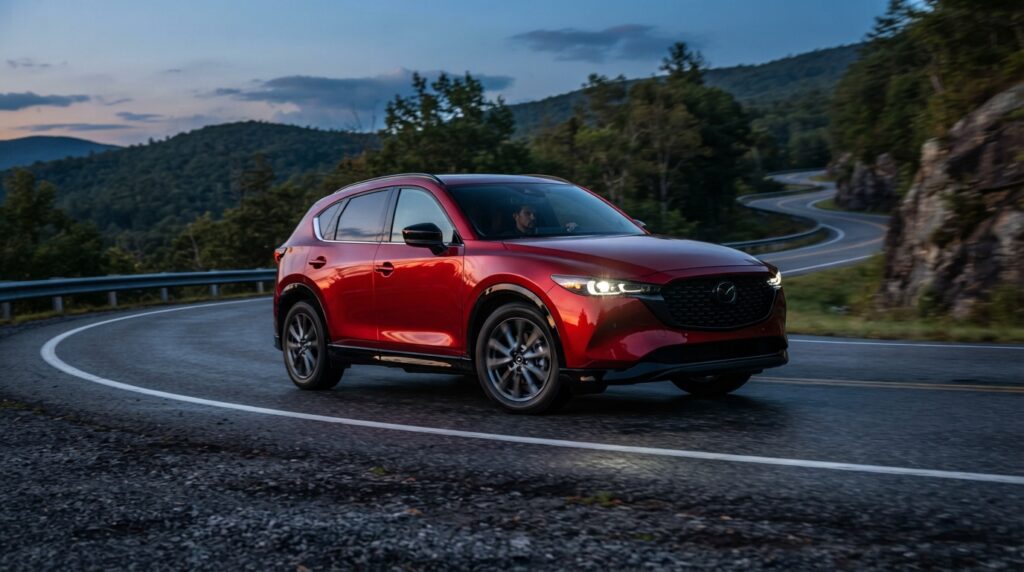
The 2026 Mazda CX-5 carries over its familiar 2.5-liter Skyactiv-G naturally aspirated four-cylinder engine, producing 187 horsepower and 186 lb-ft of torque, paired with a six-speed automatic transmission and standard i-Activ all-wheel drive on every trim. This is one of the more notable ways the new generation plays it safe: despite the ground-up redesign, Mazda chose not to touch the engine.
That decision has drawn some criticism, especially since the outgoing CX-5 offered an optional turbocharged engine that has now been dropped entirely, leaving performance-minded buyers without a stronger option for now. EPA fuel economy comes in at 24 mpg city, 30 mpg highway, and 26 mpg combined, figures that are solid but not class-leading, especially with the all-hybrid Toyota RAV4 now offering noticeably better efficiency. Mazda has confirmed a hybrid CX-5 is coming, but not until the 2027 model year.
How Does the New Touchscreen Compare to the Old Rotary Dial?
The 2026 CX-5’s biggest interior change is the shift from Mazda’s signature rotary dial infotainment controller to a touchscreen-first system, a move that has split opinion among reviewers and owners. Depending on trim, buyers get either a 12-inch or an available 15.6-inch touchscreen, the largest display ever fitted to a Mazda, running Google-built software with Google Maps and Google Assistant built in.
Some owners who’ve spent time with the new system report mixed feelings:
- Climate controls that used to be physical buttons are now touchscreen-based on some functions, which several reviewers found less intuitive while driving.
- Volume control lost its dedicated knob in favor of touchscreen or steering wheel controls, a change longtime Mazda owners have specifically called out as a step backward.
- Overall display quality and Google integration are praised as genuinely modern upgrades over the outgoing system.
Not every change is a trade-off, though. The special 40/20/40 split-folding rear seat is a functional upgrade over the standard 60/40 split found on most competitors, letting owners pass long items through the middle seat while still carrying two rear passengers comfortably.
Is the 2026 CX-5 Still Fun to Drive?
Yes, the 2026 Mazda CX-5 keeps the athletic, driver-focused character that has defined the nameplate for years, with reviewers consistently praising its precise steering and a ride quality that feels notably more refined than the outgoing generation. This driving feel remains the CX-5’s signature advantage over mainstream rivals like the CR-V and RAV4, which tend to prioritize comfort and predictability over outright engagement.
That said, real-world fuel economy hasn’t impressed everyone. At least one long-term owner reported average trip economy in the low 20s in mixed suburban driving, noticeably below the advertised 26 mpg combined rating, a reminder that EPA figures represent ideal conditions rather than a guarantee.
How Does the CX-5 Compare to Its Rivals?
The 2026 Mazda CX-5 competes directly against the Honda CR-V, Toyota RAV4, and Hyundai Tucson, positioning itself as the more driver-focused alternative in a segment that otherwise leans toward comfort-first tuning. Here’s a quick look at where the CX-5 stands out and where it falls behind:
| Category | CX-5 Strength | CX-5 Weakness |
|---|---|---|
| Driving dynamics | Sharper steering and handling than most rivals | No turbo or performance trim currently offered |
| Value | Standard AWD, competitive starting price | No hybrid until 2027 model year |
| Practicality | Improved cargo space and rear-seat room | Touchscreen-heavy controls take adjustment |
| Warranty | Standard industry coverage | Trails Korean rivals on powertrain warranty length |
Mazda’s warranty coverage is one area where it clearly lags behind competitors, particularly Korean brands like Kia and Hyundai, which tend to offer longer powertrain protection and, in some cases, complimentary scheduled maintenance that Mazda doesn’t include.
Should You Buy the 2026 Mazda CX-5 Now or Wait?
Buyers who prioritize driving feel, cargo space, and interior room should feel confident buying the 2026 CX-5 now, but those who want the strongest possible fuel economy may want to wait for the hybrid version arriving for 2027. Since this is the first model year of an all-new generation, some reviewers have also suggested waiting to let Mazda work out any early production issues, a reasonable caution with any freshly redesigned vehicle.
For families who need three rows instead of two, the CX-5 isn’t the right fit regardless of trim, since it remains strictly a five-passenger compact SUV. Shoppers in that situation might want to look at a larger three-row option like the Kia Telluride instead. But for anyone shopping specifically in the compact SUV class who values a genuinely fun-to-drive vehicle without sacrificing too much practicality, the redesigned CX-5 remains one of the strongest choices available in 2026.
Frequently Asked Questions
Does the 2026 Mazda CX-5 come with a hybrid option?
No, the 2026 Mazda CX-5 launches with only the 2.5-liter gas engine; a hybrid powertrain has been confirmed by Mazda but isn’t expected to arrive until the 2027 model year.
Is all-wheel drive standard on every 2026 CX-5 trim?
Yes, Mazda’s i-Activ all-wheel drive comes standard across the entire five-trim CX-5 lineup, a feature that competitors often charge extra for or reserve for higher trims only.
How much cargo space does the 2026 CX-5 have?
The 2026 CX-5 offers 33.7 cubic feet of cargo space with the rear seats in place and 66.5 cubic feet with them folded flat, both improvements over the previous generation.