
Volkswagen’s compact SUV has always been the sensible choice in a segment full of sensible choices, and for 2026 the Tiguan lineup gets one addition that actually changes that calculus: a new SEL R-Line Turbo trim with 67 more horsepower than every other Tiguan on sale. Everything else about the 2026 lineup — carried over from the 2025 redesign — stays familiar, which makes this drive as much about testing whether the new top trim is worth the jump as it is about revisiting the Tiguan itself.
Trim Walk: What You’re Actually Choosing Between
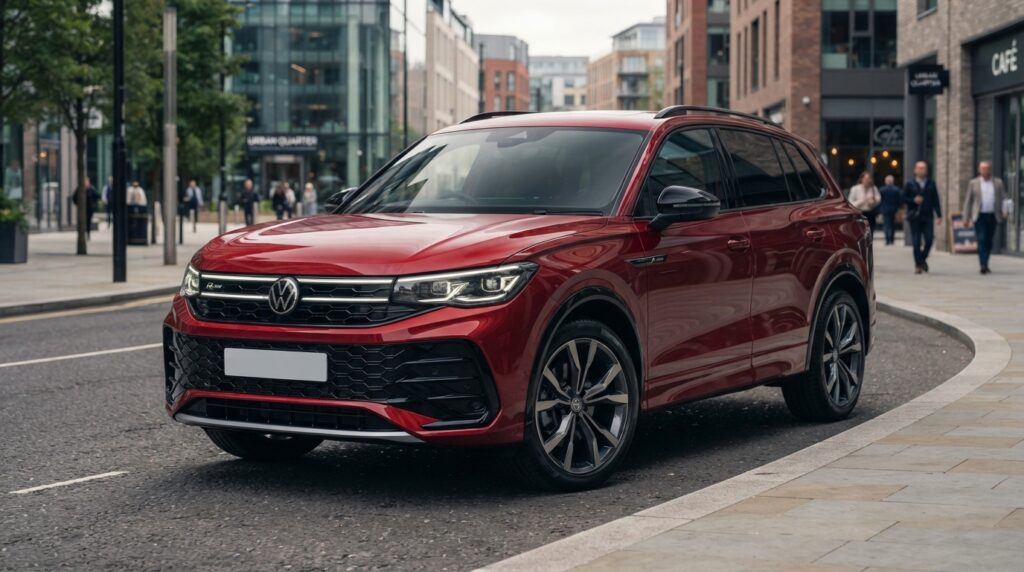
The 2026 Tiguan comes in four flavors: S, SE, SE R-Line Black, and the new SEL R-Line Turbo. Pricing starts at $30,805 for the base S according to Edmunds’ current listing, climbing to roughly $44,560–$46,500 for a well-optioned SEL R-Line Turbo. Every trim below the top one shares a turbocharged 2.0-liter four-cylinder making 201 horsepower and 207 lb-ft of torque (221 lb-ft with AWD), routed through an eight-speed automatic. Front-wheel drive is standard on the S and SE, with 4Motion all-wheel drive optional on those and the SE R-Line Black; the SEL R-Line Turbo comes with AWD standard, no other option offered.
Behind the Wheel: The New Engine Changes the Character
This is the headline story of the drive, and it delivers on the spec sheet’s promise. The SEL R-Line Turbo’s upgraded EA888 evo5 engine produces 268 horsepower at 5,500 rpm and 258 lb-ft of torque across a broad 1,900–5,400 rpm band, built with a larger turbo, lower compression, stronger internals, and variable valve lift on both intake and exhaust sides — engineering changes that show up on the road as genuinely eager, turbo-lag-free acceleration. Where the standard 201-hp Tiguan feels adequate but unhurried, the SEL R-Line Turbo pulls with real urgency and holds that momentum through a passing maneuver in a way the base engine can’t match. Volkswagen says the SEL R-Line Turbo is engineered to run happily on regular gasoline despite the power bump, a detail that matters for buyers wary of a premium-fuel requirement creeping into the ownership cost.
Ride, Handling, and Everyday Comfort
Despite the extra power up front, the SEL R-Line Turbo doesn’t feel nose-heavy or unsettled through corners; VW’s chassis tuning keeps the extra weight well controlled, and the standard 4Motion system puts the power down cleanly off the line even on damp pavement. The lower trims, riding on the same basic chassis, remain tuned toward comfort — a soft, quiet ride that absorbs broken pavement well without floating over larger dips. Road and wind noise are well suppressed across the range, and nothing about the Tiguan’s road manners changes meaningfully between trims aside from the top model’s extra grip and eagerness.
Interior and Technology
Move up from the base S and the Tiguan’s interior climbs quickly in perceived quality. The SE trim swaps in synthetic leather and adds a power liftgate and remote start, and the SEL R-Line Turbo tops out with diamond-stitched leather seating that includes both massage and ventilation up front, a 15-inch central touchscreen, and illuminated front and rear badging along with front and rear light bars — details clearly aimed at buyers who want their compact SUV to feel like more than a compact SUV. Total cargo space with the rear seats folded reaches 69.8 cubic feet, which is competitive for the class, and every trim carries VW’s now-revised Travel Assist system, updated for 2026 to include Assisted Lane Change.
Fuel Economy
The extra power in the SEL R-Line Turbo comes with a mild efficiency trade-off — EPA estimates land around 22 city/29 highway/25 combined mpg for that trim, compared with the standard engine’s figures in the high-20s combined for front-drive versions. It’s a reasonable trade given the performance gain, and owner-reported real-world figures in early feedback have landed close to or slightly above the EPA combined number, which is a good early sign, though it’s worth treating anecdotal ownership reports as early data rather than a confirmed long-term average.
Price and Rivals
| Trim | Engine | Drivetrain | Starting MSRP* |
|---|---|---|---|
| S | 2.0L Turbo, 201 hp | FWD/AWD | $30,805–$32,280 |
| SE | 2.0L Turbo, 201 hp | FWD/AWD | ~$35,000 (est.) |
| SE R-Line Black | 2.0L Turbo, 201 hp | FWD/AWD | ~$38,000 (est.) |
| SEL R-Line Turbo | 2.0L Turbo, 268 hp | AWD standard | $44,560–$46,500 |
*Figures compiled from Edmunds and dealer listings; confirm exact current pricing with a local VW dealer, as regional and mid-year adjustments are common.
Against rivals like the Honda CR-V, Toyota RAV4, and Mazda CX-50, the standard Tiguan competes mostly on comfort and interior refinement rather than outright power. The SEL R-Line Turbo changes that equation, putting the Tiguan’s 268 horsepower ahead of anything the CR-V or RAV4 currently offer in a non-hybrid trim, and closer in spirit to the Mazda CX-50’s turbocharged top trim, though final head-to-head performance comparisons would need a back-to-back test to confirm.
Early Verdict
Based on this first drive, the SEL R-Line Turbo is the trim that finally gives the Tiguan a personality beyond “competent and comfortable” — the extra power is immediately noticeable and genuinely fun in a way the standard engine isn’t, and the interior upgrades at that trim level make a real case for stretching the budget. This remains a preliminary impression built around a limited test drive; how the new, more highly stressed engine holds up over years of ownership is a question this drive can’t answer.
FAQ
What’s new on the 2026 Volkswagen Tiguan?
The main addition is the SEL R-Line Turbo trim, which uses an upgraded 268-horsepower version of the Tiguan’s 2.0-liter turbocharged engine — 67 hp more than every other trim.
How much does the 2026 Tiguan cost?
Pricing starts at $30,805 for the base S trim and reaches roughly $44,560 to $46,500 for the SEL R-Line Turbo, before options and destination charges.
Does the SEL R-Line Turbo require premium fuel?
No — Volkswagen engineered the upgraded engine to run on regular unleaded gasoline despite its power increase.
Is all-wheel drive standard on the Tiguan?
AWD is optional on the S, SE, and SE R-Line Black trims and standard on the SEL R-Line Turbo, which isn’t offered with front-wheel drive.
What’s the Tiguan’s fuel economy?
The SEL R-Line Turbo is EPA-rated around 22 city/29 highway/25 combined mpg, while lower trims with the standard 201-hp engine post modestly better combined figures.
What are the Tiguan’s main competitors?
Key rivals include the Honda CR-V, Toyota RAV4, Mazda CX-50, and Hyundai Tucson.
How much cargo space does the 2026 Tiguan offer?
Total cargo capacity with the rear seats folded down is 69.8 cubic feet.
This article reflects a first-drive impression based on a limited test drive under specific conditions. Final production specifications, pricing, and availability may vary by trim and region — confirm current details with your local Volkswagen dealer before making a purchase decision.